Beyond Skills and Titles: Why Workforce Development Begins with Belief

Dec 8, 2025


At the Grace Hopper Celebration 2025, I thought I was just showing up to learn, to grow my network, gain insights in project management, and build my knowledge as a future leader. But somewhere between the keynotes, coffee chats, and spontaneous 1:1 meetups, I realized something far deeper: leadership doesn’t wait for a title. It begins the moment you decide to make an impact.

One of the most powerful moments for me this year was hosting my Brain date discussion: “How to Lead Without Having the Title.” I walked in expecting a small group conversation and instead, I found myself surrounded by a diverse circle of brilliant minds. There were students still in their junior year, mid-career professionals navigating change, and even a woman close to retirement, reflecting on decades of leadership in tech.

That diversity of experience was magical. As we went around the table, one question sparked a moment of connection: “When did you realize you could lead even before someone gave you permission to?”. The answers were raw, honest, and beautifully human. Some talked about moments when they spoke up in meetings despite fear. Others shared stories of taking ownership when things went wrong. A few admitted they never saw themselves as leaders until someone told them they had inspired them.

And that’s when it hit me: leadership is not promotion. It’s practice.

It’s the quiet confidence to take ownership, even when you’re not asked to.
It’s the courage to connect with people, solve problems, and bring clarity to chaos.
It’s the humility to lift others up, even when no one is watching.

Throughout GHC, I found myself surrounded by women who embodied exactly that. I met students who were anxious about standing out in competitive spaces, women switching careers who wondered if they still “belonged,” and seasoned professionals reflecting on how leadership has evolved. Many of them joined me for 1:1 sessions, spontaneous conversations that started with a simple notification on the GHC app: “Someone requested 1:1 with you.” I’ll admit, I dropped a few of my planned sessions just to meet them. But those moments were worth every second. We talked about how to break into data science, how to talk to recruiters, how to build confidence, and how to stay grounded in an industry that moves faster than ever. What started as mentoring quickly turned into learning for me too. Every story, every question, every “thank you” reminded me that giving back is the most fulfilling form of growth.

One theme kept resurfacing: young women in tech are not lacking talent, they’re often lacking belief. Imposter syndrome, hesitation to self-advocate, and fear of being “too bold” came up repeatedly. But here’s what I told each of them and what I reminded myself too:

You don’t need permission to lead. You lead every time you take initiative. You lead when you ask the hard question. You lead when you choose collaboration over competition.

On the last day of the conference, I had a surreal, full-circle moment. I ran into Brenda Darden Wilkerson, the incredible woman leading AnitaB.org. I nervously went up to say a quick thank-you and instead, she thanked me back for contributing to the community. That exchange summed up everything I felt that week: leadership is circular. When we give, we receive. When we lift others, we rise too.

As I walked out of GHC 2025, I didn’t just feel inspired, I felt unstoppable. Because leadership isn’t about waiting for the title. It’s about showing up, speaking up, and lifting others along the way. And if even one woman I met walks away feeling more confident, more inspired, and ready to lead in her own way, that’s my biggest win.

Being at GHC this year made me realize something important: workforce development isn’t only about skills, it’s about belief. So many women I met had the talent; they just needed someone to reassure them that they already have what it takes to lead. Helping them see that felt like the real impact.


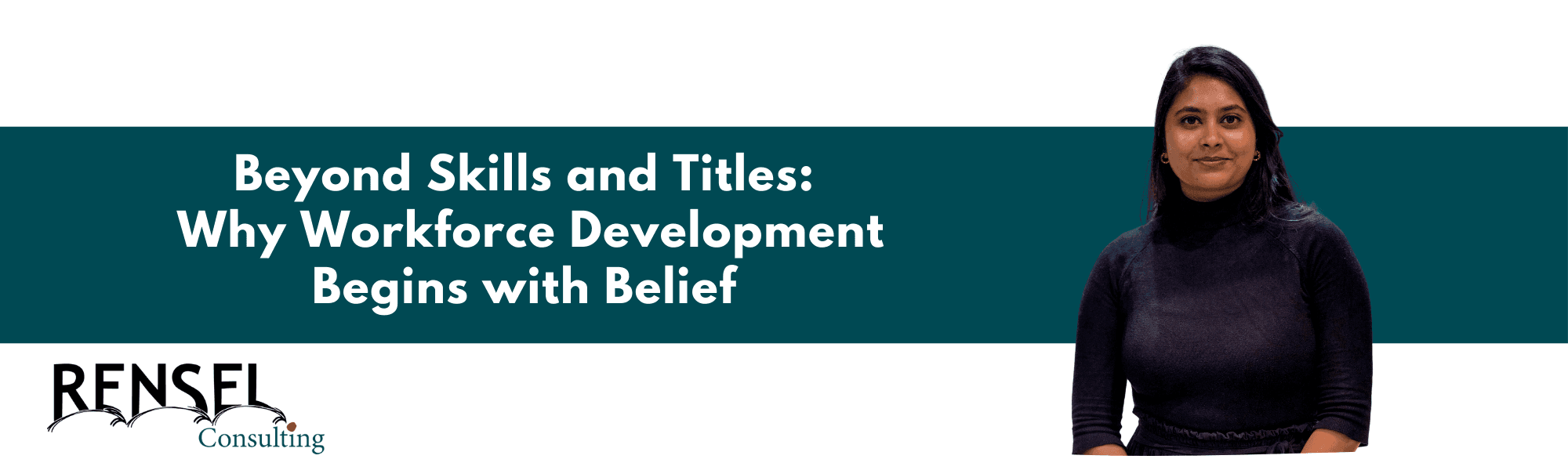
Written by Sheetal Patangay, Data Scientist and Strategy Specialist


Beyond Skills and Titles: Why Workforce Development Begins with Belief

Dec 8, 2025


At the Grace Hopper Celebration 2025, I thought I was just showing up to learn, to grow my network, gain insights in project management, and build my knowledge as a future leader. But somewhere between the keynotes, coffee chats, and spontaneous 1:1 meetups, I realized something far deeper: leadership doesn’t wait for a title. It begins the moment you decide to make an impact.

One of the most powerful moments for me this year was hosting my Brain date discussion: “How to Lead Without Having the Title.” I walked in expecting a small group conversation and instead, I found myself surrounded by a diverse circle of brilliant minds. There were students still in their junior year, mid-career professionals navigating change, and even a woman close to retirement, reflecting on decades of leadership in tech.

That diversity of experience was magical. As we went around the table, one question sparked a moment of connection: “When did you realize you could lead even before someone gave you permission to?”. The answers were raw, honest, and beautifully human. Some talked about moments when they spoke up in meetings despite fear. Others shared stories of taking ownership when things went wrong. A few admitted they never saw themselves as leaders until someone told them they had inspired them.

And that’s when it hit me: leadership is not promotion. It’s practice.

It’s the quiet confidence to take ownership, even when you’re not asked to.
It’s the courage to connect with people, solve problems, and bring clarity to chaos.
It’s the humility to lift others up, even when no one is watching.

Throughout GHC, I found myself surrounded by women who embodied exactly that. I met students who were anxious about standing out in competitive spaces, women switching careers who wondered if they still “belonged,” and seasoned professionals reflecting on how leadership has evolved. Many of them joined me for 1:1 sessions, spontaneous conversations that started with a simple notification on the GHC app: “Someone requested 1:1 with you.” I’ll admit, I dropped a few of my planned sessions just to meet them. But those moments were worth every second. We talked about how to break into data science, how to talk to recruiters, how to build confidence, and how to stay grounded in an industry that moves faster than ever. What started as mentoring quickly turned into learning for me too. Every story, every question, every “thank you” reminded me that giving back is the most fulfilling form of growth.

One theme kept resurfacing: young women in tech are not lacking talent, they’re often lacking belief. Imposter syndrome, hesitation to self-advocate, and fear of being “too bold” came up repeatedly. But here’s what I told each of them and what I reminded myself too:

You don’t need permission to lead. You lead every time you take initiative. You lead when you ask the hard question. You lead when you choose collaboration over competition.

On the last day of the conference, I had a surreal, full-circle moment. I ran into Brenda Darden Wilkerson, the incredible woman leading AnitaB.org. I nervously went up to say a quick thank-you and instead, she thanked me back for contributing to the community. That exchange summed up everything I felt that week: leadership is circular. When we give, we receive. When we lift others, we rise too.

As I walked out of GHC 2025, I didn’t just feel inspired, I felt unstoppable. Because leadership isn’t about waiting for the title. It’s about showing up, speaking up, and lifting others along the way. And if even one woman I met walks away feeling more confident, more inspired, and ready to lead in her own way, that’s my biggest win.

Being at GHC this year made me realize something important: workforce development isn’t only about skills, it’s about belief. So many women I met had the talent; they just needed someone to reassure them that they already have what it takes to lead. Helping them see that felt like the real impact.


Written by Sheetal Patangay, Data Scientist and Strategy Specialist